I just want to look cool again: how I built a stylist app instead of buying new clothes

Vibe coding, matrescence and a wardrobe I'm bored of: I built a personal stylist app with Claude, which never suggests I need to buy something new.
Summary: I've dressed the same lazy, repetitive way since ~2020. Three years into parenting and a new job, it started dragging my vibe down. I don’t need more clothes. Half of what I own is invisible at the back of a drawer, and most mornings I don't have the brainspace to reconstruct outfits from scratch. So instead of shopping, I built a stylist app with Claude: a wardrobe catalogue that tags every photo, an outfit builder, a 'surprise me' shuffle, and a style-identity page. It complements Stylebook (the outfit-logging app I already use), costs next to nothing to run, and I never opened a code editor. Honestly, it’s two days old now and my favourite thing I've ever built.
I want to look hot again. Fake it til I make it: no spending extra money, no buying anything I don't need. For context I’m three years into parenting (let’s call this my matrescence) and have just started a new job, so I’m capitalising on this feeling of a new chapter. And wanting it to be a hot one.
It’s not that I don’t have the right clothes. Half of what I own is tucked at the back of a drawer or the closet, and most mornings I don't have the brainspace to reconstruct what goes with what. Being a toddler parent, overachiever and with the general chaos of 2026, there’s no room for outfit planning. And I can see this pattern has been in place since circa 2020 (IYKWIM).
A personal styling session with Allison Bornstein gave me my 'three words', the shorthand for what I want to look and feel like getting dressed. Which is totally brilliant and you should identify yours too. But knowing your three words and applying them at 7am, half-dressed, are two different problems.
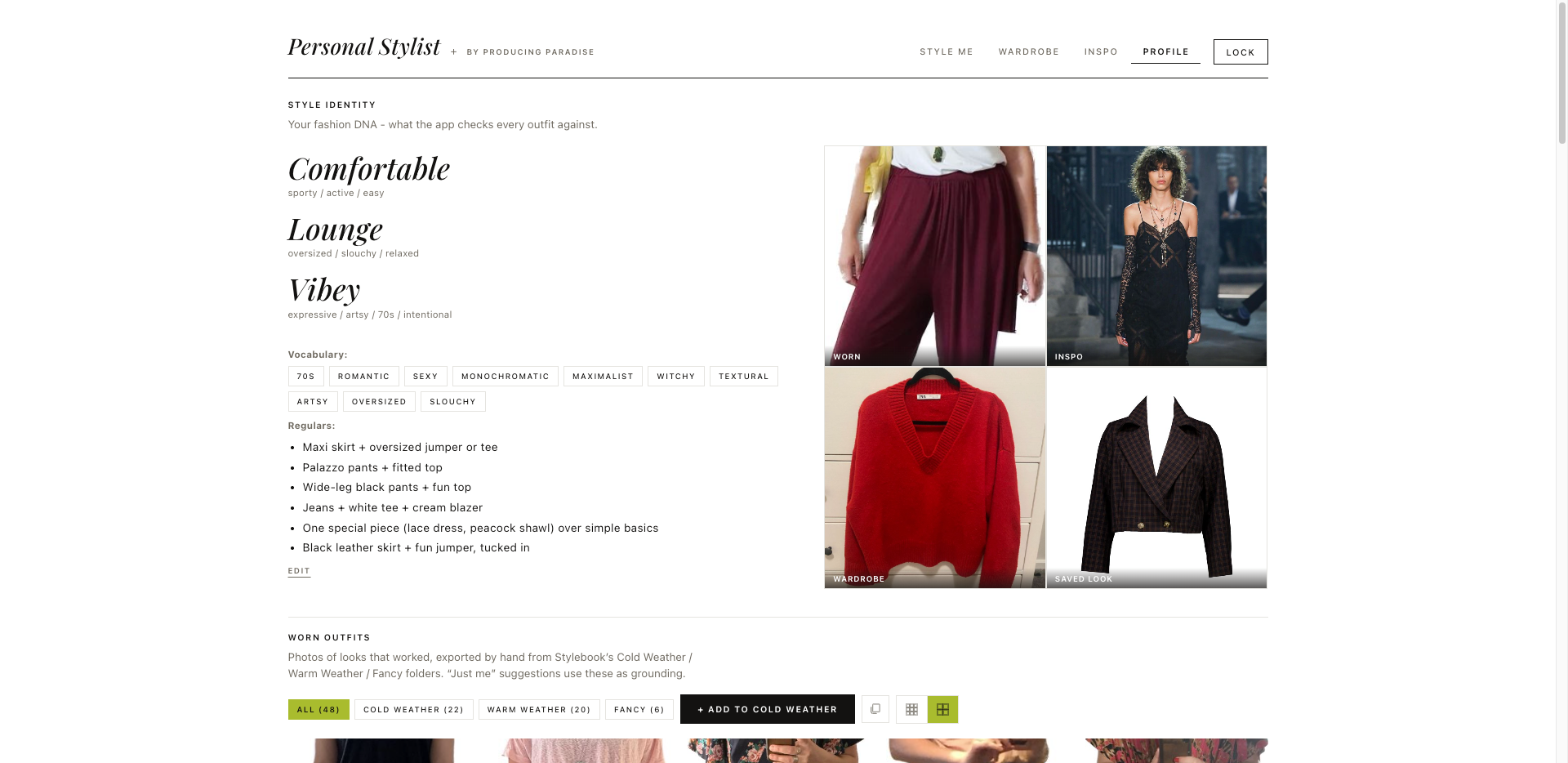
My Personal Stylist app profile page, inspired by Allison Bornstein
Knowing my style vs applying it
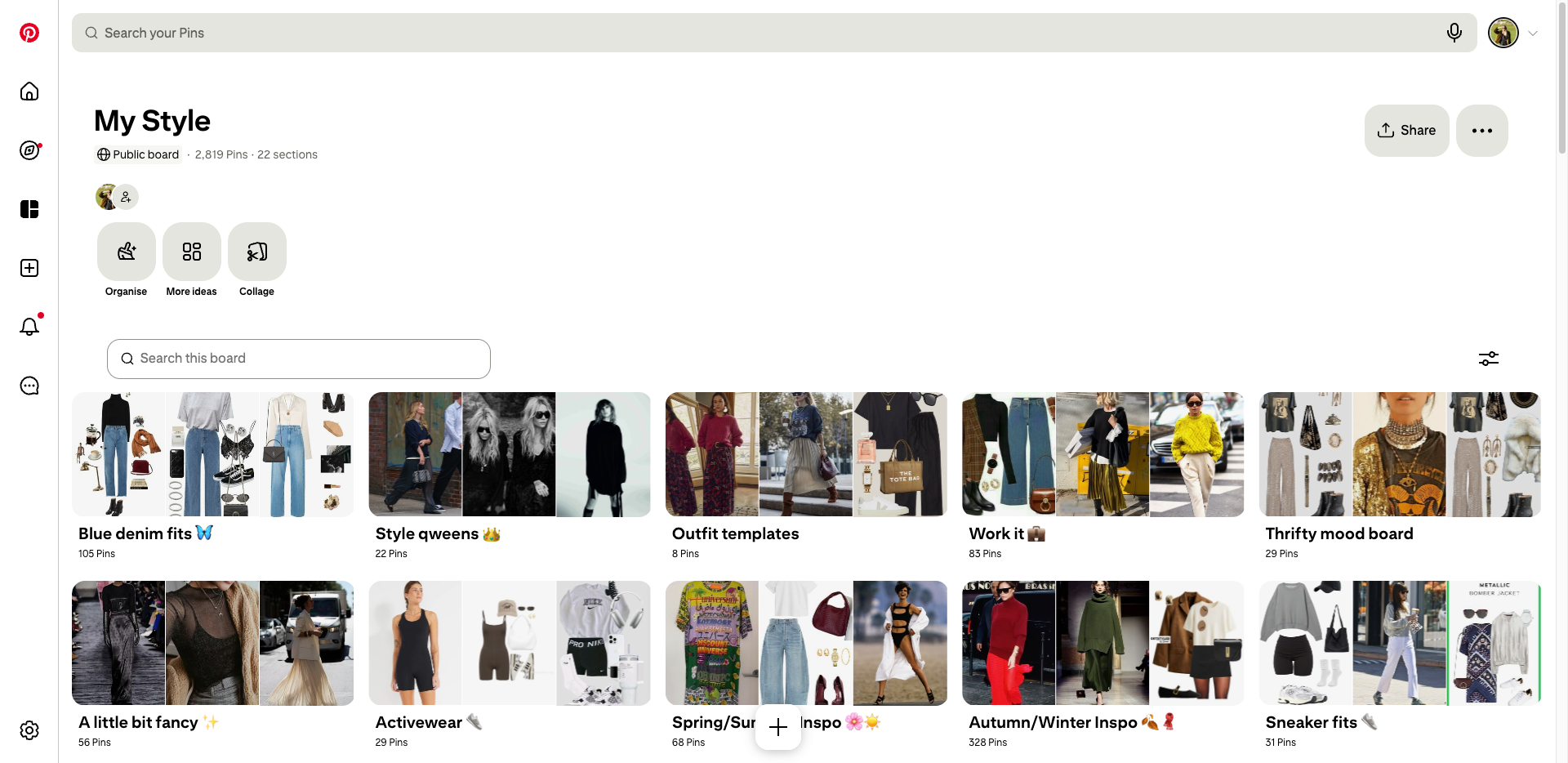
I'm a Pinterest girlie from way back
Every styling method I'd tried gave me insight, but I needed a way to apply them when I’m dressing myself. Usually in a hurry. I’d spend some time in Pinterest or on a styling session getting clear on what I wanted, then stare blankly at my wardrobe trying to ‘shop my closer’ or combine pieces in a cool, stylish way. I knew I was into 'romantic, oversized, 70s' clothing but couldn’t connect this to what I could see hanging in front of me.
Outfit apps assume you want to shop
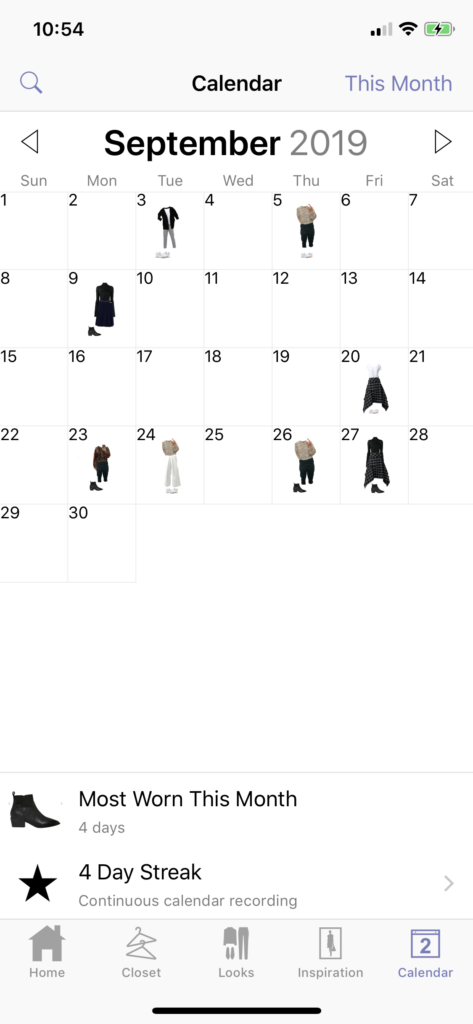
Existing wardrobe and outfit apps tend to offer discovery: browse more and buy more, chase whatever's trending. That's the opposite of what I needed. I already use Stylebook to log my wardrobe and track what I've worn, and I didn't want a second app duplicating it or nudging me toward buying more. I wanted something that works with my current wardobe, could hold a 'wanted' list for those in consideration (cough, Depop likes, cough), and that would help me rediscover my hidden garments.
So this app won’t replace Stylebook, or at least not yet! I still export outfit photos from there into the profile page here, but my app adds the functionality I was missing: tags, filters, a 'wanted' list, and a Clueless-esque browsing mode, to surface my hidden gems.
I used to manage web developers, now I build
For years I was a digital producer, briefing web designers and developers and translating client needs into something they could build. And then recently I used Replit (vibe coding app) to build ParentShift. But now I’ve clocked the Claude plus Vercel combo with my recent blog post outline and recipe apps, I feel unstoppable!
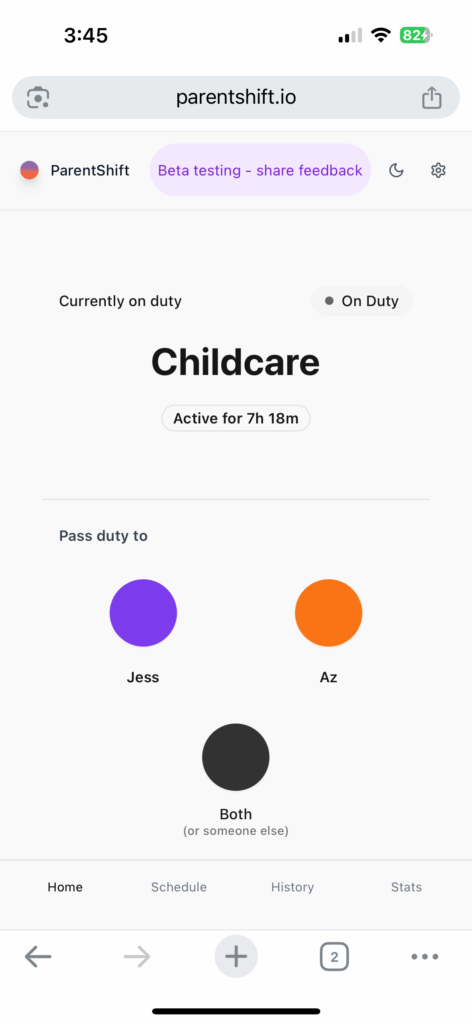
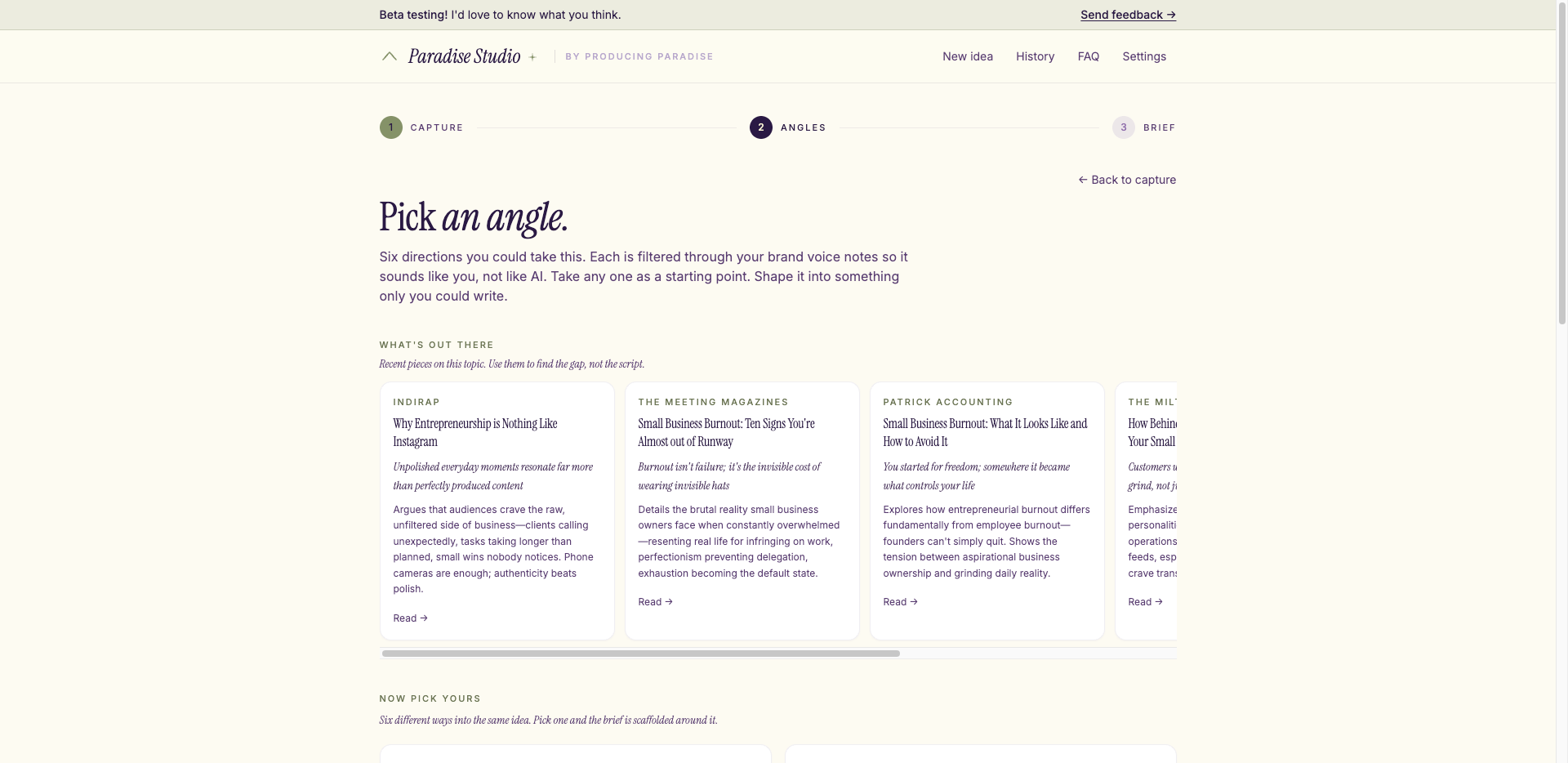
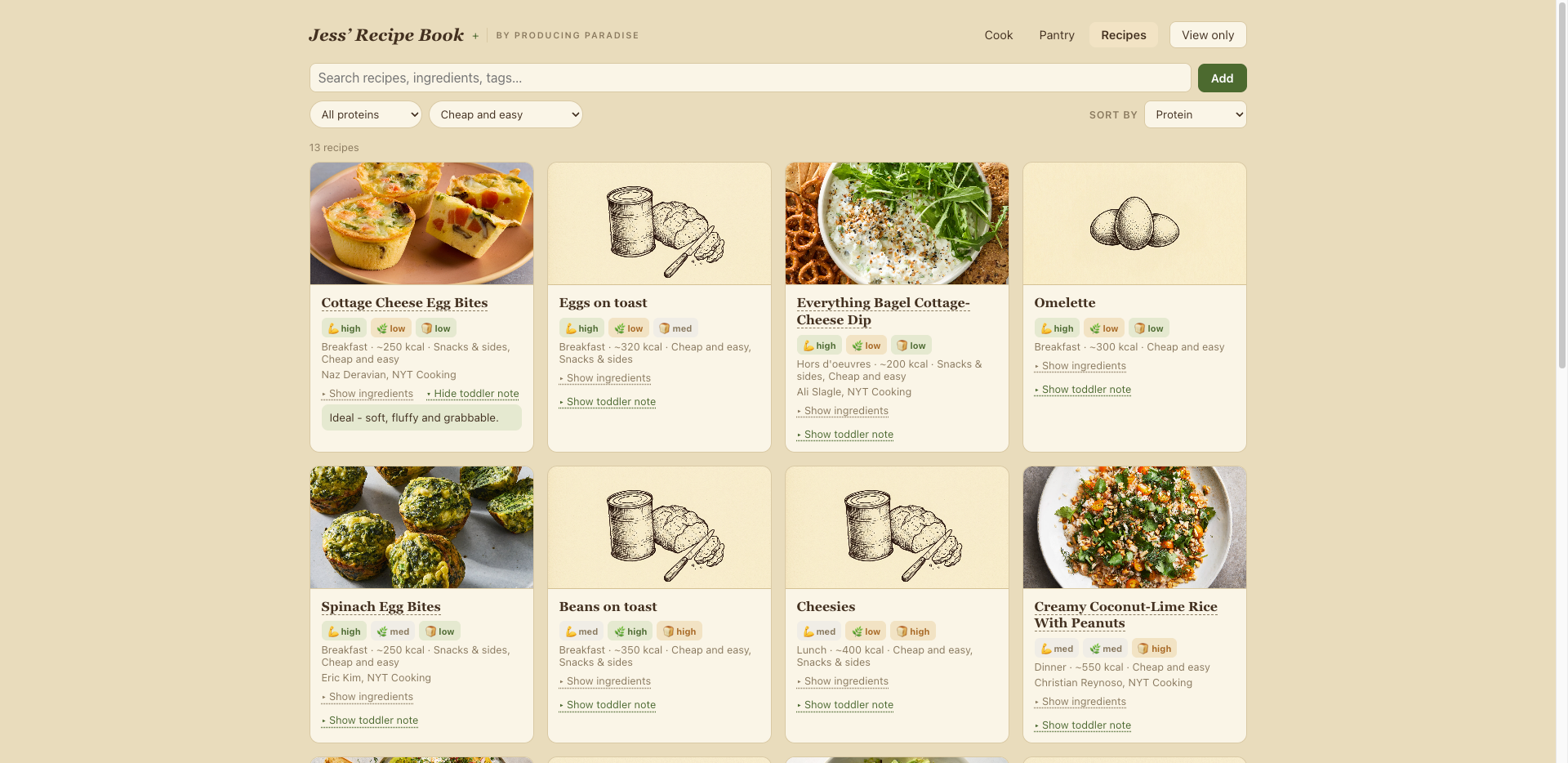
In each case, I describe what I want to Claude, using the Cowork function to read and write files straight into a project folder on my computer. Then it tells me the Terminal commands to push the changes live. I never opened a code editor. It's all managed in a conversation and a folder on my computer that Claude just kept updating.
This vibe coding business, I'm addicted to it. Creating things this way gives me a feeling of possibility I never had when someone else was doing the building: any tool that would make my life better now feels like something I can just make. I'm not oblivious to AI's downsides, and I'm not pretending they don't exist. I've made a deliberate choice anyway: play in the grey area, and use it as efficiently as I can. That means understanding what a tool's capable of before I lean on it.
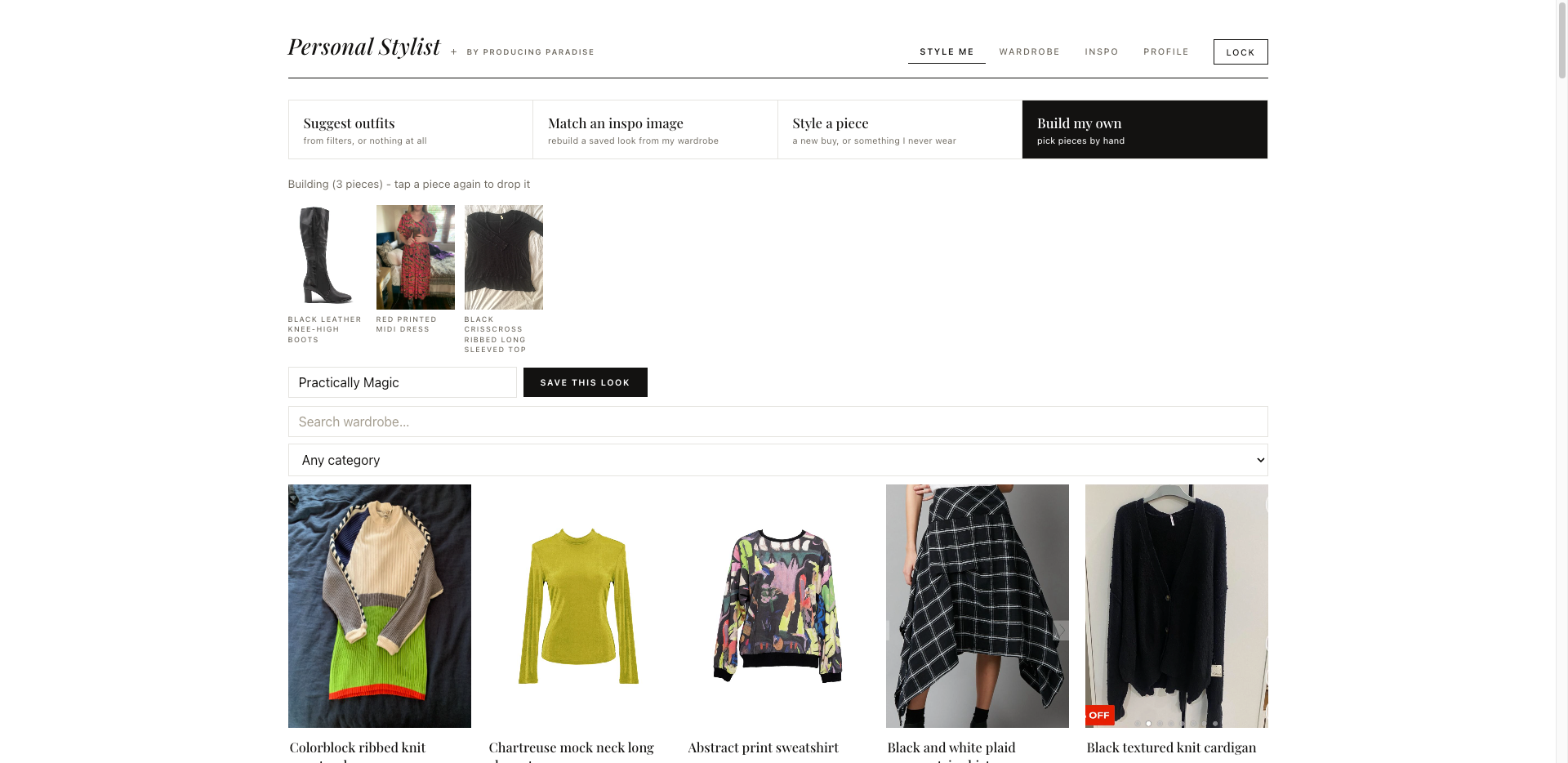
Building my own outfit in my Personal Stylist app
What's running underneath
| Layer | What it does |
|---|---|
| Frontend and backend | Next.js, the same framework behind my recipe app |
| Hosting | Vercel, free tier |
| Database | Upstash Redis, free tier, connected from inside Vercel with no manual setup |
| Photo tagging | Claude's vision API, suggests category, colour, season and style tags from a photo |
| Background cleanup | A background-removal service, applied automatically to wardrobe photos |
Tagging and suggestions cost a few cents per call at the volume I'm using it. That's the only real spend. Everything else sits on a free tier I was already using for another app.
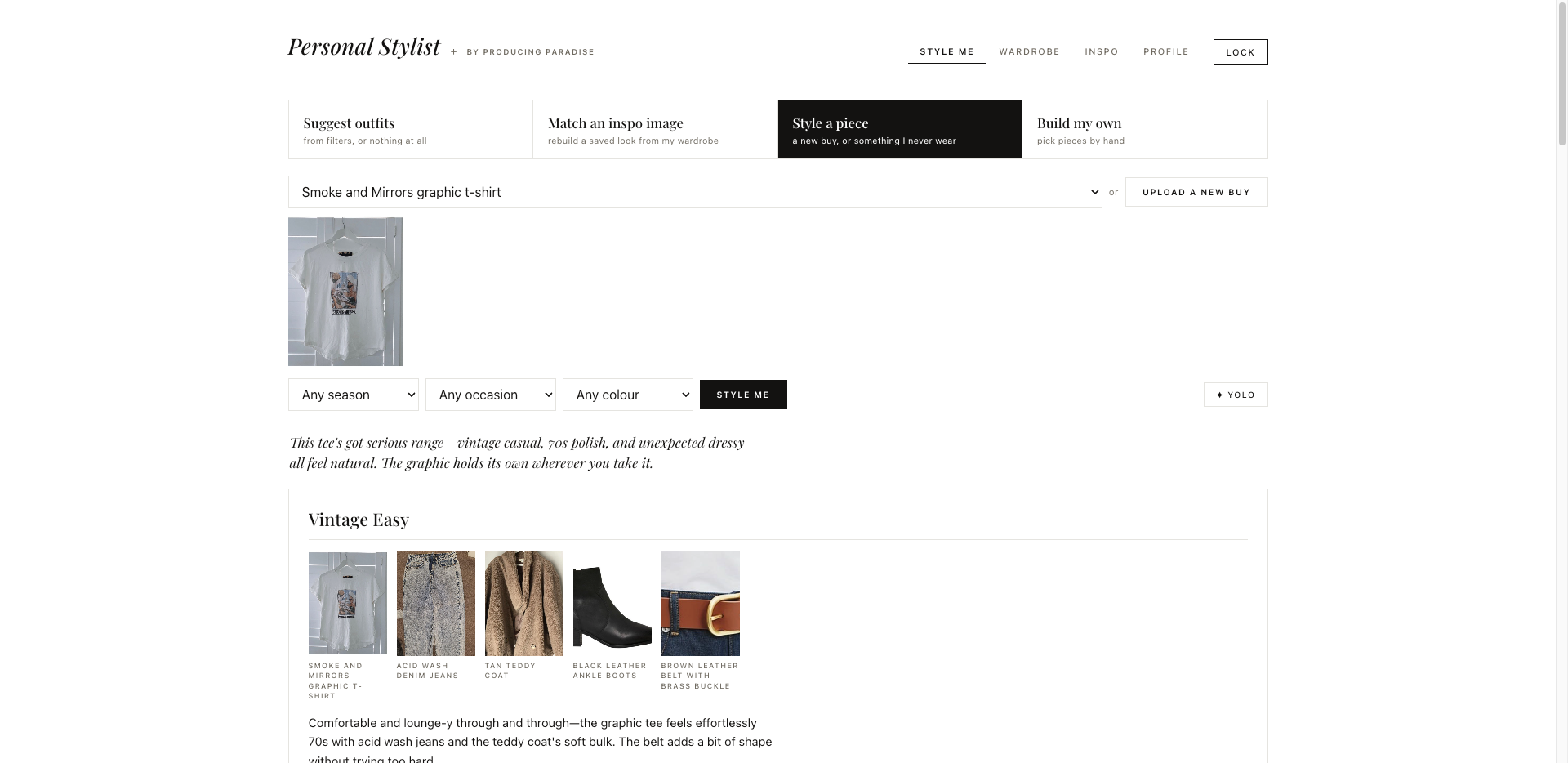
Getting help to style an item I own in my Personal Stylist app
It never tries to sell me anything
The wardrobe tab is where everything lives: every piece I own, photographed once, auto-tagged, filterable by category, colour, season, and a set of style words drawn from that Bornstein session. Upload a photo of a jumper and it comes back tagged automatically: knitwear, olive, cold weather, oversized, ready to filter by straight away. An inspiration board sits alongside it for outfit photos and product screenshots I've saved from Pinterest, Depop, wherever, tagged the same way so the two feel consistent even though they do slightly different jobs.
Before building, I did some competitor recon on other wardrobe and styling apps and cherry-picked the handful of features that would be useful to me. I skipped the rest. A 'surprise me' shuffle picks something at random from what's wearable right now, for the mornings I don't have the brainspace to decide. An outfit builder lets me put pieces together by hand. A composition chart shows the actual shape of my wardrobe by category and colour, which was its own small reckoning (turns out I own far more of some colours than I'd have guessed). The whole thing only ever proposes outfits from pieces I own. The 'wanted' list of things I'm considering buying sits deliberately separate from the suggestions, so it can't quietly become a shopping app.
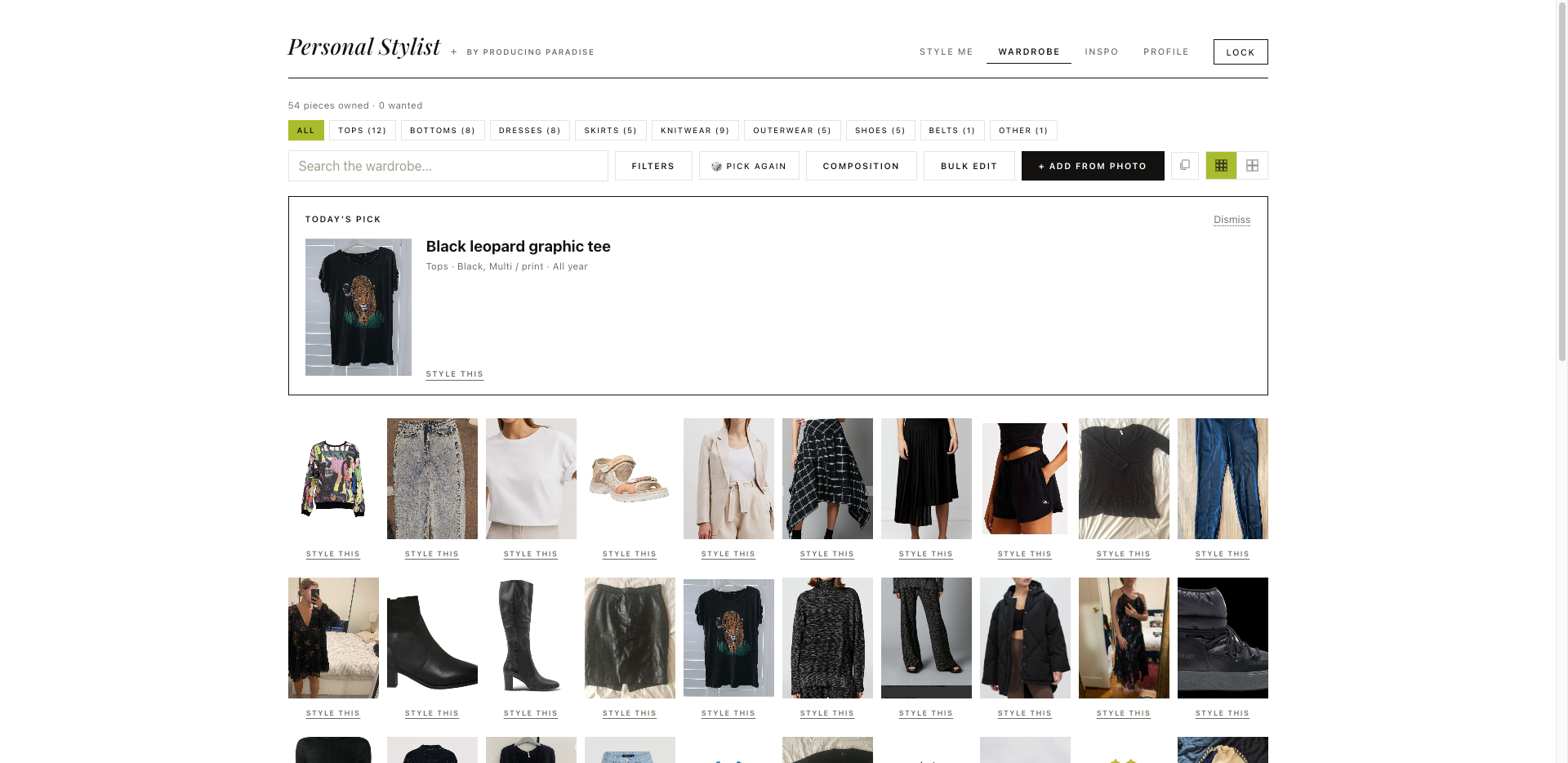
My Personal Stylist app showing me items I already own
If you want to make your own
This is close to the actual sequence I used to get it live, with my own paths and usernames swapped out. It assumes you already have a working app in a folder on your computer and a GitHub and Vercel account, but you could just as easily create things with help from Claude, by giving it the proposed pathway below.
Open a terminal and go to your project folder: cd path/to/your-app
Turn it into a git repository and make the first commit: git init, git add ., git commit -m "first version"
Create a private GitHub repository for it (don't tick any of the 'initialise with a README' options)
Push your code up, using the commands GitHub shows you for an existing repository: git remote add origin https://github.com/your-username/your-app.git, git branch -M main, git push -u origin main
In the Vercel dashboard, add a new project and import that repository. If it's a standard Next.js app, Vercel detects that automatically and needs no configuration to deploy
Add a database from the project's Storage tab (I used Upstash Redis's free tier) and connect it. The environment variables it needs get added for you
Get an API key from Anthropic's console. If the account has no credit yet, add a small amount, usage at this scale runs to a few cents per call
In your project's environment variables, add your API key and any password you want gating access to the app
Redeploy so the new environment variables take effect
Open the live site, log in, and run through one real action end to end (mine was adding a wardrobe piece) to confirm everything's connected
After that it's just: describe the change, review it, git push, live in about a minute. No manual deploys, ever again.
Want to get started with my wardrobe app code? It’s here!
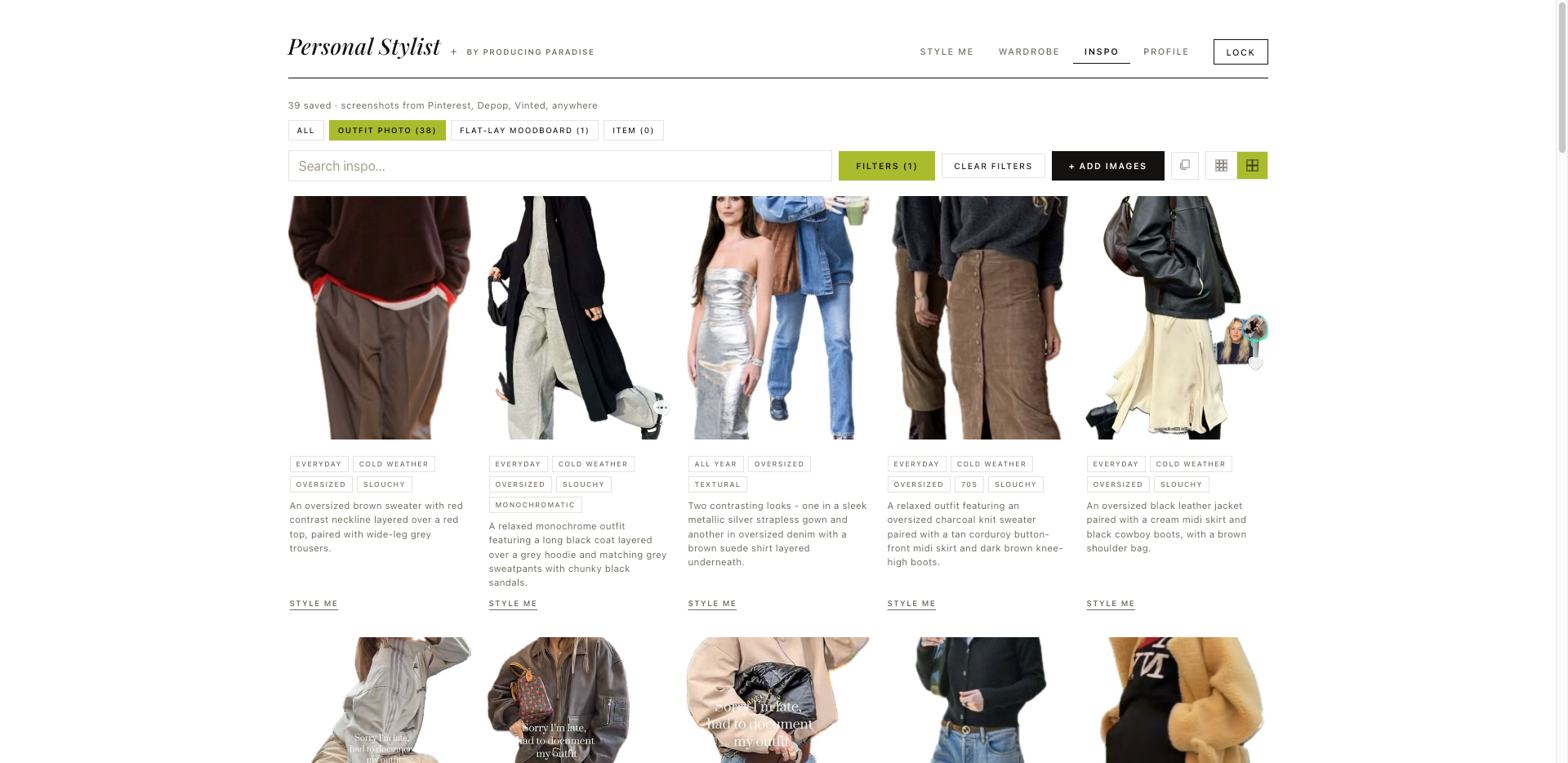
My Personal Stylist app inspo capture page
It's already been rebuilt a handful of times
It's two days old, and it's already been through more rounds than I expected for something this fresh. I used it, then came back with a real bug: a photo upload was failing with an unhelpful 'bad request' message. Another time, the filters on the wardrobe tab and the inspiration tab didn't feel consistent with each other, even though they do genuinely different things. Then it was the checkboxes crowding their labels on my phone. Then a colour accent and a full redesign of the profile page, because it was the plainest-looking tab in the app. Then, then, then, then…
Each time an issue popped up I would describe it, in plain language, and Claude fixed it and showed me the result. The process gets quicker every time I do this. Since building the other few apps recently, I'm better at scoping with Claude before we start building. I deliberately push things into a later phase instead of piling everything into version one. This was next cab off the rank, and it might be my favourite yet.
I can't wait for my next styling session with Allison Bornstein. This time, the photos have somewhere to go!
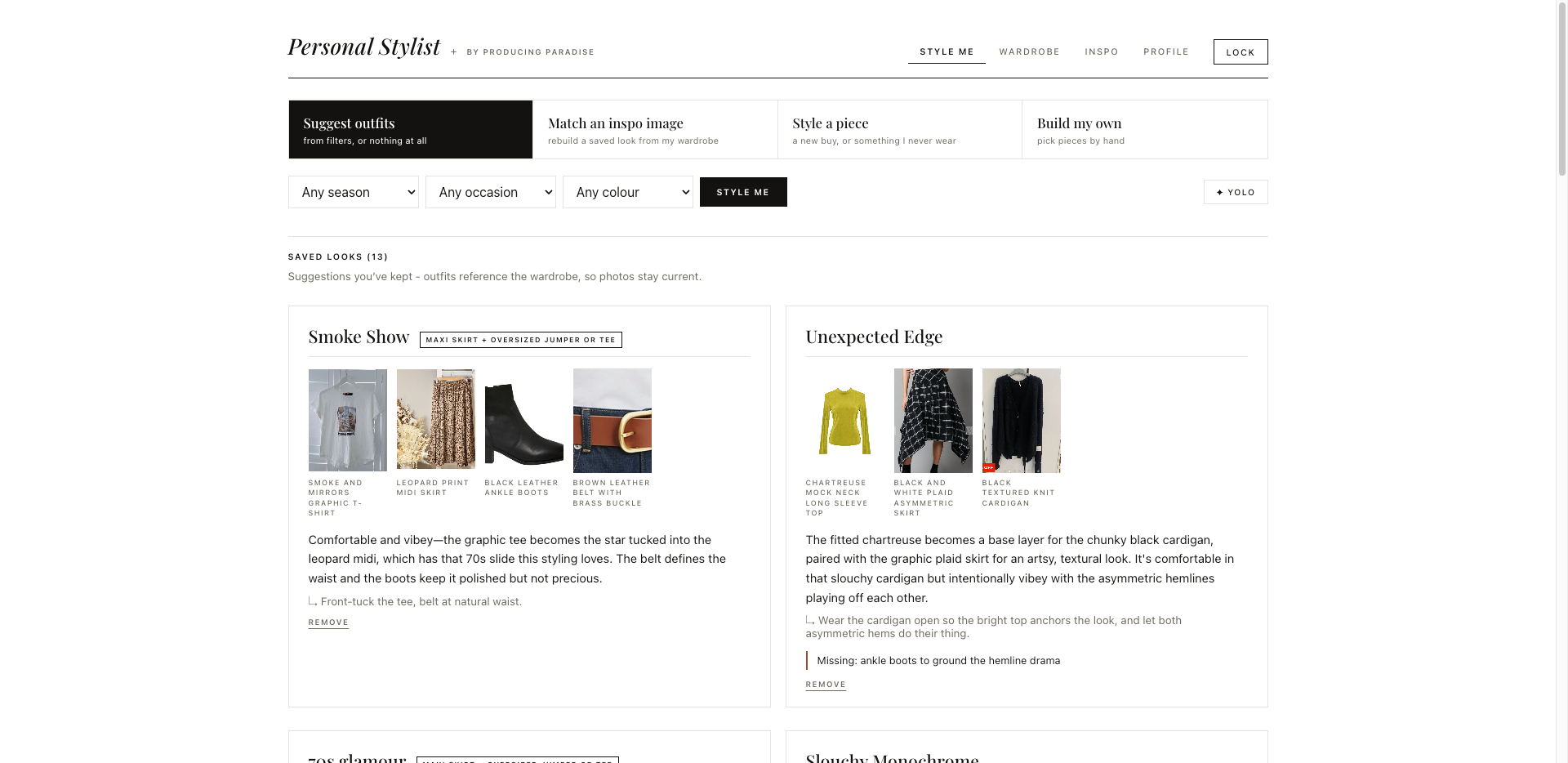
My Personal Stylist app in outfit suggestion mode
Frequently asked questions
What is the Personal Stylist app?
A private wardrobe app I built with Claude. It catalogues everything I own with AI-generated tags, holds a separate inspiration board and 'wanted' list, and only ever suggests outfits from what I already have.
Do I need to know how to code to build something like this?
No. I don't write code, and every change to this app, including the bug fixes, went through a plain-language conversation with Claude. What helps is knowing roughly what you want. You don't need to know how to build it.
How is this different from using an app-building platform like Replit?
An app-builder platform sets up hosting and a database for you inside its own environment. Going through Claude directly meant setting those up myself, a handful of extra steps at the start, but I ended up on infrastructure I control and can reuse for other projects.
Why not just use Stylebook for everything?
Stylebook logs what I own and what I've worn, which is a job it does well. It doesn't AI-tag photos, filter by style words, or surface what's buried at the back of a drawer. This app sits alongside it. It doesn't replace it.
What does it cost to keep running?
Hosting and the database are both on free tiers. The only ongoing spend is API calls for photo tagging, which run to a few cents at normal use.
Can I have access to your Github repository for this?
Yep! Here’s the link to grab it for yourself.
Sorted your vibe? Let's sort the rest of your brainspace
If low brainspace was worth solving for what I wear, it's worth solving for the rest of what's running in the background of a normal week too.
Want a plug-and-play system that gets your projects, client work and admin out of your head and into one place?
The Organised Creative Notion Template does exactly that, so you're not reconstructing your week from scratch every Monday, the same way I was reconstructing outfits every morning.
EXPLORE THE TEMPLATE →
Ready for the complete framework behind it?
The Most Organised Person I Know shows you how to design the kind of simple systems that turned 'I wish there was an app for that' into an app I open every morning.
GET THE BOOK →